 BestAIFor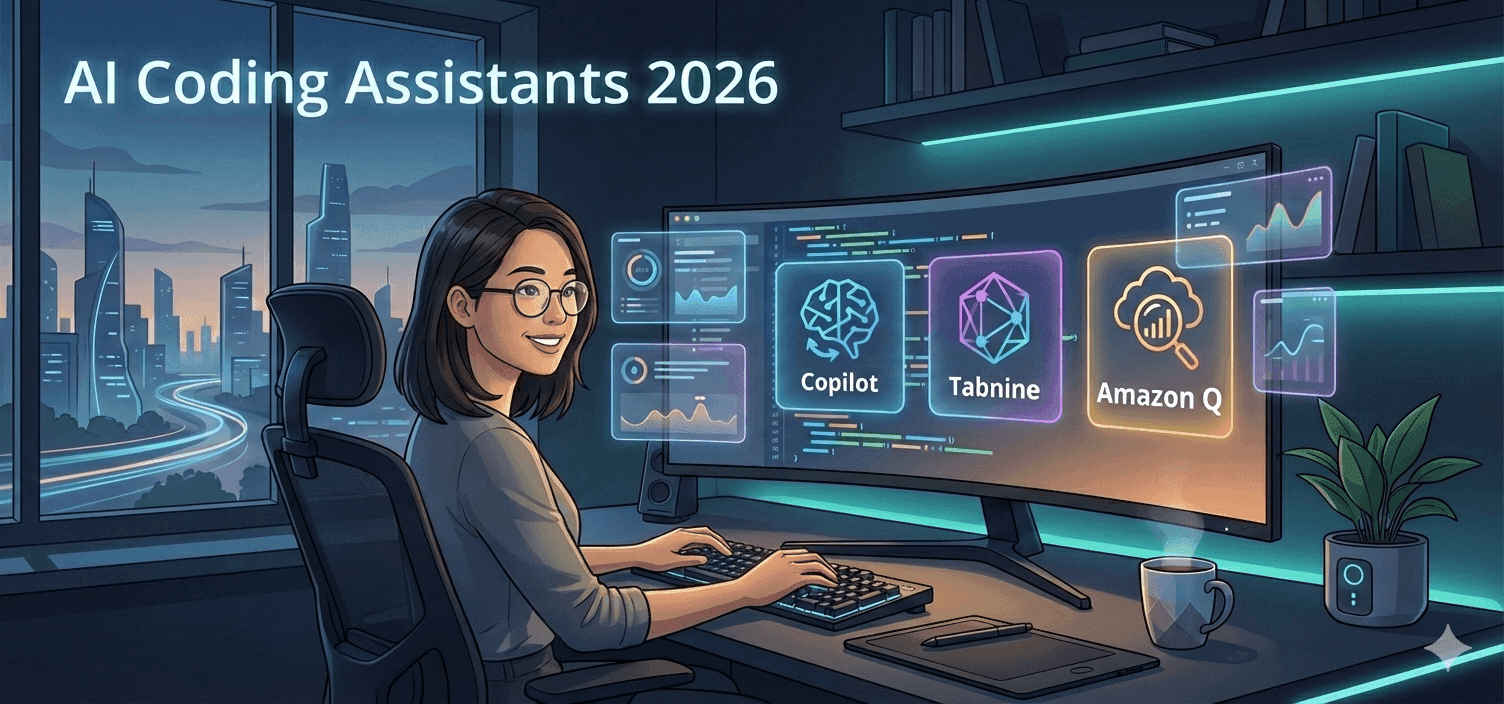
Coding Assistants 2026 GitHub Copilot Tabnine and Amazon Q For Beginners
A beginner friendly guide to AI coding assistants in 2026 comparing GitHub Copilot, Tabnine, and Amazon Q
January 23, 2026•11 min read
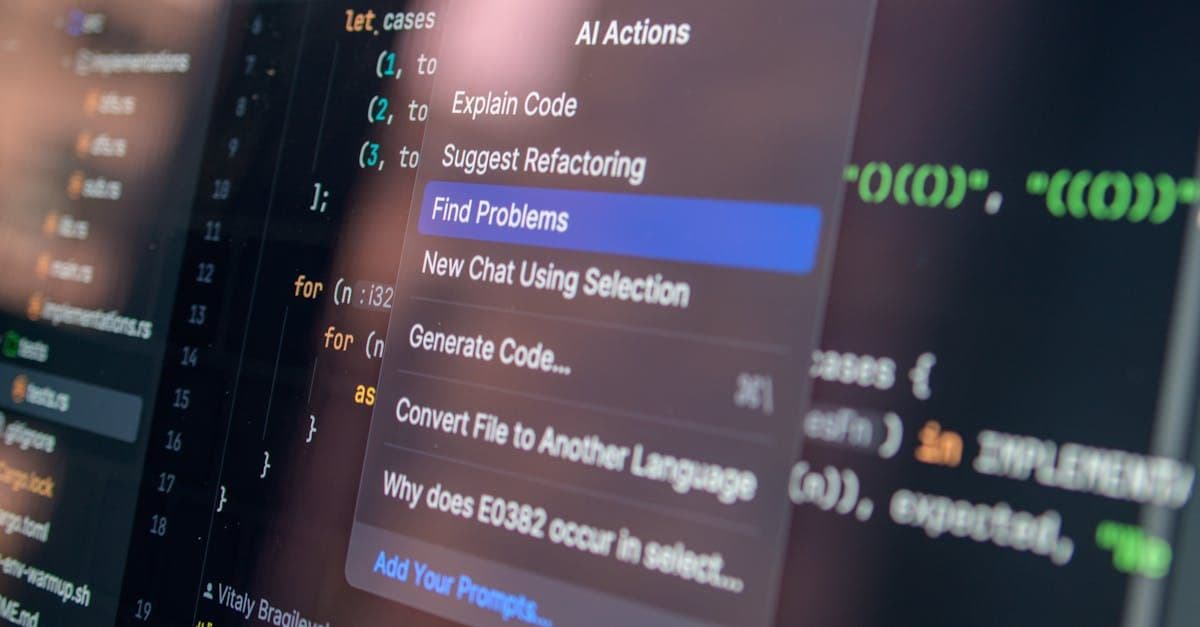
Combining multiple AI coding tools into a unified workflow is delivering measurable productivity gains for developers who get the configuration right. The efficiency argument is real — but the integration overhead is also real, and most teams underestimate it. The open question: whether the current generation of agentic tools can actually be trusted to handle production-level API work without human checkpoints at every step.
The pitch for stacking AI coding tools sounds clean in a demo: one tool handles context retrieval, another generates boilerplate, a third runs tests, and the whole chain ships features faster. The reality is messier.
Most AI coding assistants were designed to work as standalone products. Their APIs have different authentication models, rate limits, and output formats. When you start wiring them together, you're not just getting the benefits of each tool — you're also inheriting the failure modes.
That said, the tooling for composition is maturing faster than most practitioners expected a year ago. Orchestration layers, shared context protocols, and purpose-built middleware are making it genuinely feasible to build workflows where AI agents hand off work to each other. The teams getting the most out of ai coding tools merging aren't trying to automate everything — they're identifying the three or four high-friction points in their specific workflow and targeting those.
Let me walk you through what the current generation of tools actually does, where the gaps still are, and what a reasonable integration architecture looks like.
OpenClaw is positioned as a context-aware code orchestration layer. Its core value proposition is maintaining state across multiple tool calls — something that most standalone AI assistants reset on each interaction. For developers working in large codebases, that context persistence is the difference between an assistant that knows your project structure and one that needs to be re-briefed every session.
MoltBot takes a different approach. Rather than maintaining context centrally, it operates as a transformation layer — it takes the output of one AI tool and reformats it into the input schema expected by the next. That sounds narrow, but in practice it solves one of the most tedious problems in multi-tool setups: output compatibility.
When you run OpenClaw for context retrieval and then try to feed that output into a code generation model with a different prompt structure, you typically end up writing adapter code by hand. MoltBot handles that translation automatically, at least for the tool combinations it's been trained on.
Neither tool is a complete solution on its own. OpenClaw's context persistence is most valuable when you're working within a well-structured codebase that it's already indexed. MoltBot's value depends on whether your specific tool combination is in its support matrix. Together, they address the two most common friction points in multi-tool setups — but you still need to evaluate whether those are your friction points.
AI coding tools have historically been much stronger at backend logic than frontend layout. ViewCreator targets this directly. It takes component specifications — either natural language descriptions or rough wireframes — and generates usable UI code with styling hooks already wired in.
The practical use case here is not replacing a frontend developer. It's eliminating the blank-canvas problem: the stage where a developer knows what a component needs to do but hasn't started writing the scaffolding. ViewCreator gets you to a reviewable starting point faster. What you do from there still requires human judgment about accessibility, edge case behavior, and brand consistency.
SquidCloud functions as an API gateway layer for multi-tool architectures. Instead of each AI agent in your workflow making direct calls to every external service it needs, SquidCloud centralizes those connections. That has two concrete benefits: you manage credentials in one place, and you get observability into what each agent is actually calling.
The observability piece is underrated. When you're debugging a multi-agent workflow that's producing wrong output, knowing which external service returned unexpected data — and what that data looked like — cuts the debugging time significantly.
AgentDM handles the coordination problem: when Agent A finishes its piece of work, what happens next, and how does Agent B know to pick up from the right state? The naive solution is to write custom handoff logic for each agent pair. AgentDM abstracts that into a configuration layer, so you define the workflow graph once and let the framework handle the execution state.
This is valuable, but it comes with a significant caveat. For teams already working with AI coding tools, the challenge of getting AI agents to reliably handle API integrations is a known and persistent problem. AgentDM doesn't solve the underlying reliability issue — it just makes it easier to build the scaffolding around unreliable agents.
Google's Gemma 4 is relevant here specifically for teams that cannot route source code through external APIs — financial services, healthcare, defense contractors. Gemma 4's multimodal support and improved reasoning over Gemma 3 make it a credible option for running AI coding assistance on-premise.
The tradeoff is real: you get privacy, but you lose the continuous model improvements that cloud-hosted services deliver automatically. You're also taking on the infrastructure overhead of running inference locally, which requires hardware investment most small teams won't find worth it unless the privacy requirement is non-negotiable.
The biggest mistake teams make with ai coding tools merging is trying to automate a full workflow before they've proven that any single integration works reliably. Pick one specific bottleneck — say, the time between a PR review comment and a proposed fix — and solve that end-to-end first.
Solving one thing completely tells you more about the integration complexity than sketching five things at the design level.
Building trust with agentic AI is not a philosophical question — it's an engineering practice. You start with agents that suggest rather than execute. You add execution capabilities only after you've validated the suggestion quality over enough samples to have statistical confidence.
This matters especially for API-calling agents. An AI agent that's good at generating code is not necessarily good at determining whether a specific API call is safe to make in your environment. Those are different capabilities, and conflating them causes incidents.
Any action that crosses an external boundary — a production API call, a database write, a deployment trigger — should require explicit human approval during the evaluation phase. This isn't a performance limitation; it's a trust-building step. Once you've validated that an agent's decisions at a specific boundary are reliable, you can automate the approval. Not before.
| Tool | Primary Function | Best For | Key Limitation |
|---|---|---|---|
| OpenClaw | Context-aware orchestration | Large codebases needing persistent state | Requires indexed codebase to be effective |
| MoltBot | Output transformation / adapter layer | Cross-tool format compatibility | Limited to supported tool pairs |
| ViewCreator | UI component generation | Frontend scaffolding from specs | Output still requires human review for production |
| SquidCloud | API gateway / credentials hub | Multi-agent observability and auth management | Adds a network hop; adds a dependency |
| AgentDM | Task orchestration between agents | Workflow graphs with multiple handoff points | Doesn't fix underlying agent reliability |
| Gemma 4 AI | On-premise coding assistance | Privacy-constrained environments | Infrastructure overhead; no automatic model updates |
Don't stack tools before your single-tool workflow is stable. If your team is still figuring out how to integrate one AI coding assistant into your code review process, adding a second tool multiplies the noise. Get one integration solid before you add complexity.
Don't use agentic API callers on production systems without approval gates. The current generation of AI agents is meaningfully unreliable when it comes to API integration edge cases — authentication token expiry, rate limit handling, pagination, error response interpretation. According to Andreessen Horowitz's 2024 AI infrastructure survey, API reliability remains one of the top cited failure modes for agentic systems in production. Unsupervised agents hitting production APIs is an incident waiting to happen.
Don't treat orchestration frameworks as a substitute for observability. AgentDM and similar tools make it easier to build multi-agent workflows. They don't automatically give you visibility into what happened when something fails. You still need logging, alerting, and human-readable audit trails.
Don't deploy Gemma 4 locally if you don't have the hardware budget. Running a capable local model requires meaningful GPU investment. The privacy benefit is real, but not every team needs it. Running a local model on undersized hardware produces slower, lower-quality output than using a cloud API — and undercuts the entire point.
Context windows will make some of this complexity irrelevant. As AI coding assistants gain longer and more reliable context windows, the need for specialized context persistence tools like OpenClaw diminishes. Models that can hold an entire codebase in context don't need an external orchestration layer to maintain state. Whether that future arrives in 18 months or 5 years is genuinely uncertain.
Standardized agent communication protocols are gaining traction. Anthropic's Model Context Protocol and similar emerging standards are moving toward a world where AI agents can communicate through shared formats rather than bespoke adapters. If those standards achieve broad adoption, tools like MoltBot become less necessary. If standards fragment, they become more necessary. Watch this closely — the winners here will be determined by which protocols get embedded in the major development environments.
Privacy-first deployment will split into two distinct markets. The Gemma 4 trajectory points toward a future where enterprise teams running sensitive codebases have capable, cost-effective local models. And cloud-hosted services continue improving for everyone else. These markets may develop largely independently, with different tool ecosystems, different benchmarks, and different integration patterns.
Reliability will become the primary competitive battleground. Right now, AI coding tools compete primarily on capability — what they can generate. As baseline capability becomes table stakes, reliability — does it work consistently, does it fail gracefully, can it be trusted in production — will differentiate the tools worth building workflows around. Teams building for reliability today are ahead of where the market is moving.
Human-AI pair programming is converging toward a new default workflow. The model isn't "AI replaces developer" or "AI assists developer on demand." It's closer to a continuous collaboration where the human handles judgment, architecture, and review while AI handles generation, transformation, and repetitive analysis. The tools that embed naturally into that rhythm — without requiring developers to context-switch into a separate interface — will win adoption.
Do I actually need multiple AI coding tools, or is one good enough? For most individual developers, one well-configured tool handles the majority of use cases. Multi-tool stacks make sense when you've identified specific gaps — like a backend-focused assistant that underperforms on UI work — and you have the engineering capacity to manage the integration overhead. Start with one tool. Add a second only when you've hit a concrete, documented limitation.
How do I evaluate whether an AI agent's API integration is reliable enough to automate? Run it in suggestion mode for at least two to four weeks across a range of real tasks before giving it execution permissions. Track false positives (wrong suggestions you caught), false negatives (errors it missed), and edge case failures. If the error rate is below your team's tolerance threshold and the failures are recoverable, automate. If not, keep the human checkpoint.
Is building trust with agentic AI just a matter of testing more? No — testing is necessary but not sufficient. Trust-building with agentic AI also requires understanding the model's failure modes, not just its average performance. A model that's 95% accurate overall but fails catastrophically in one specific scenario (say, handling expired OAuth tokens) isn't safe to automate at that boundary, even with high aggregate accuracy.
What's the actual ROI case for merging AI coding tools? The honest answer is: it depends heavily on what you're automating and how much integration overhead you accept. McKinsey's 2023 developer productivity research suggests 20–45% productivity gains from AI coding tools in general — but those numbers represent best-case implementations, not average ones. Multi-tool stacks have higher upside and higher setup cost than single-tool implementations.
Does Gemma 4 perform comparably to cloud-hosted models for coding tasks? On standard benchmarks, Gemma 4 is competitive with mid-tier cloud models. It's not at the frontier of what GPT-4o or Claude Sonnet can do on complex reasoning tasks, but for most day-to-day coding assistance — autocomplete, refactoring, documentation generation — the gap is small enough to be worth the privacy trade-off if you need it.
What's the risk of using SquidCloud as a single point of failure in my tool stack? Real and worth planning for. If SquidCloud goes down or rate-limits your account, every agent that routes through it loses access to external APIs simultaneously. Any tool you add as middleware in a critical workflow path needs a documented fallback. Ask the vendor what their uptime SLA is and whether they publish incident history before you route production workloads through it.
How should teams think about governance for multi-agent coding workflows? Define boundaries before you deploy, not after. Which agents can read code? Which can write? Which can call external APIs? Which require human approval before executing? Document those decisions, version-control the configuration, and review them when you add new agents or new capabilities to existing ones. Governance that's added retroactively to a complex workflow is always incomplete.
A beginner friendly guide to AI coding assistants in 2026 comparing GitHub Copilot, Tabnine, and Amazon Q

Z.ai’s GLM-5 scores 77.8% on SWE-bench Verified and 62.0 on BrowseComp, nearly doubling Claude Opus 4.5’s 37.0. First open-weights model above 50 on the Artificial Analysis Intelligence Index.

Z.AI's GLM-5.1 scored 58.4 on SWE-Bench Pro, edging GPT-5.4 and Claude Opus 4.6 by less than 1.1 points. The benchmark lead is real — the hardware requirement to run it locally is not consumer-grade.
AI coding tools in 2026 look crowded from the outside and narrower from the inside. Frontier models cluster tightly on the benchmarks that get published, and the gap that actually matters — the one between what an...
AI agents are pitched as the thing that finally automates the grunt work of API integration. The evidence from controlled studies and production deployments tells a messier story — real gains on narrow tasks...